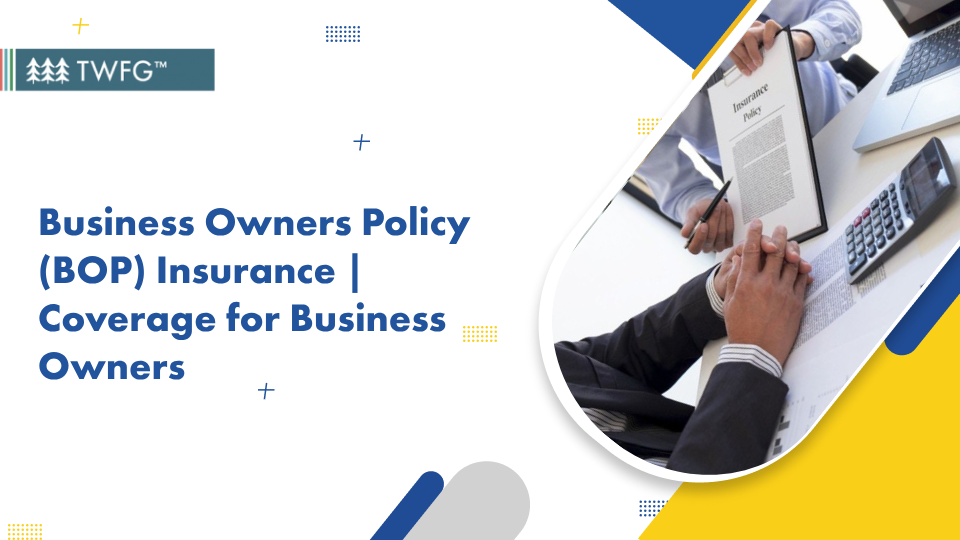
A Business Owners Policy combines General Liability and Commercial Property coverage, and may include Business Income coverage for eligible businesses. TWFG Commercial helps Houston and Texas businesses evaluate BOP eligibility and compare coverage options as part of a broader commercial insurance program.
Business Owners Insurance Built for Small and Mid-Sized Businesses
A Business Owners Policy is a packaged commercial insurance policy, not a one-size-fits-all solution. It bundles several coverages that many eligible businesses need at the same time, which can simplify how a business is insured compared to buying each policy separately.
A BOP may be worth reviewing if your business:
- Has an office, storefront, warehouse, or leased space
- Owns equipment, inventory, furniture, computers, or tools
- Works with clients, customers, vendors, or landlords
- Needs General Liability plus property protection
- Could face an operational interruption from a covered property loss
Eligibility note: Business type, revenue, payroll, property value, locations, and risk level all affect BOP eligibility. Not every business qualifies for a standard BOP, and that’s part of what a quote conversation is for.
What Is a Business Owners Policy?
A insurance for business owners policy is designed to combine the coverages many eligible businesses need most often. Actual coverage depends on the carrier, policy form, limits, deductibles, endorsements, and exclusions.
What Does a Business Owners Policy Cover?
General Liability Insurance
- Third-party bodily injury
- Third-party property damage
- Personal and advertising injury
- Premises and operations claims
- Legal defense for eligible claims
Example: A customer slip-and-fall, or accidental damage to a client’s property.
Commercial Property Insurance
- Business building, if owned and included
- Equipment and computers
- Furniture and fixtures
- Inventory and supplies
- Tenant improvements
- Covered causes of loss, subject to policy terms
Example: Fire or theft damages office equipment and inventory.
Business Income and Extra Expense
- Eligible lost income after a covered property loss
- Continuing expenses, such as rent or payroll
- Extra expenses needed to resume operations
Example: A covered fire forces a temporary closure.
What BOP Insurance Does Not Usually Cover
- Workers’ compensation
- Commercial auto
- Professional Liability / Errors & Omissions
- Cyber liability and data breaches
- Employment Practices Liability
- Flood and earthquake
- Pollution liability
- Directors and Officers insurance
- Product recall
- Inland marine for movable equipment
- Umbrella/excess liability
A BOP may be a strong foundation, but it does not replace every commercial insurance policy. Most businesses layer additional coverage on top of a BOP as their operations grow.
Who May Need an Insurance for Business Owners Policy?
Professional Offices and Service Businesses
Consultants, marketing agencies, accounting and bookkeeping firms, real estate offices, and technology and administrative service businesses.
If your business provides advice or professional services, Professional Liability is also worth reviewing.
Retail Stores and Local Shops
Retail stores, boutiques, salons, specialty shops, and restaurants or cafes (only if eligible and confirmed).
Small Contractors and Trade Businesses
Cleaning companies, handyman services, landscaping, and light maintenance companies.
Higher-risk trades may need a Commercial Package Policy or a specialized program instead.
Home-Based Businesses
Home-based consultants and service businesses, and businesses with client visits, equipment, inventory, or contract requirements.
Homeowners insurance may not address all business exposures, which is where a BOP can help fill the gap.
Businesses With Equipment, Inventory, or Leased Space
If your business doesn’t fit neatly into the categories above but carries equipment, inventory, or a lease, a BOP is still worth a conversation.
Business Owners Policy vs. General Liability Insurance
General Liability covers eligible third-party claims; a BOP adds Commercial Property and may add Business Income coverage.
| Coverage need | General Liability only | BOP insurance |
| Third-party bodily injury claims | May be included | Included |
| Third-party property damage | May be included | Included |
| Personal and advertising injury | May be included | Included |
| Business equipment and inventory | Not included | May be included through Commercial Property |
| Business Income after covered loss | Not included | May be included |
| Best for | Asset-light businesses with limited property exposure | Eligible businesses with liability and property/income exposure |
See our related post: Business Owners Policy vs. General Liability Insurance
BOP vs. Commercial Package Policy
A BOP is a standardized package built for eligible smaller, lower-to-moderate-risk businesses. A Commercial Package Policy (CPP) is more customizable, built for larger, higher-risk, multi-location, or specialized operations.
Businesses may outgrow a BOP when they have:
- Higher property values
- Multiple locations
- Specialized exposures
- Higher revenue or payroll
- Complex client contracts
- High-risk operations
Optional Coverage to Add to a BOP
Availability depends on carrier, business type, and eligibility.
- Workers’ compensation
- Commercial auto
- Professional Liability / E&O
- Cyber liability
- Equipment breakdown
- Hired and Non-Owned Auto
- Inland marine/equipment floaters
- Employee dishonesty/crime
- Ordinance or law coverage
- Umbrella/excess liability
- Higher property limits
- Flood or earthquake
How TWFG Helps You Choose BOP Insurance
Review Your Business Operations
Industry and services, business locations, equipment and inventory, revenue and payroll, employees and vehicles, client contracts and lease requirements, existing policies and claims history.
Compare Coverage Options
Determine BOP eligibility, review coverage limits and deductibles, identify exclusions and potential gaps, and compare a BOP against a more customized commercial program.
Support Contract and COI Requests
Review requested General Liability limits, additional insured requirements, primary and noncontributory wording, waiver of subrogation, and certificate holder requirements. A COI summarizes coverage; it does not create coverage.
Review Coverage as the Business Grows
Hiring employees, moving or adding locations, buying equipment, adding vehicles, increasing inventory, expanding services, and signing larger contracts.
Business Owners Policy Insurance in Houston, Texas
Houston businesses often operate out of leased office, retail, or warehouse space, and carry equipment and inventory that a landlord or contract may require them to insure. Storm-related property damage and downtime are also common local exposures worth planning around.
TWFG helps Houston and Texas companies assess BOP eligibility and compare commercial coverage options as their operations change.
FAQs: Business Owners Policy Insurance
Q.1 What is a Business Owners Policy?
A Business Owners Policy, or BOP, is a package policy that typically combines General Liability, Commercial Property, and Business Income coverage for eligible small and mid-sized businesses.
Q.2 What does insurance for business owners cover?
A BOP may cover third-party bodily injury and property damage claims, business property such as equipment and inventory, and eligible lost income after a covered property loss interrupts operations. Actual coverage depends on the policy terms, limits, exclusions, and endorsements.
Q.3 Is a BOP the same as General Liability insurance?
No. General Liability focuses on eligible third-party liability claims. A BOP includes General Liability and may also include Commercial Property and Business Income coverage.
Q.4 Does a BOP include workers’ compensation?
Typically, no. Workers’ compensation is usually purchased separately when required by law, contract, or business needs.
Q.5 Does BOP insurance include commercial auto?
Typically, no. Businesses that own, lease, or regularly use vehicles for work should review Commercial Auto insurance separately.
Q.6 Does a BOP cover professional liability?
Typically, no. Professional Liability or Errors and Omissions insurance may be needed for businesses that provide advice, design, consulting, technical services, or other professional services.
Q.7 Who qualifies for BOP insurance?
BOPs are usually designed for eligible small and mid-sized businesses with lower-to-moderate hazards. Eligibility depends on the business type, revenue, property values, payroll, locations, claims history, and insurer guidelines.
Q.8 How much does BOP insurance cost?
The cost of a BOP depends on the industry, location, revenue, payroll, property values, inventory, limits, deductibles, claims history, and endorsements selected. Requesting a customized quote is the best way to estimate pricing.
Q.9 Can I get a COI for a BOP policy?
Yes. Once a policy is active, an insurer or authorized agency may issue a Certificate of Insurance showing applicable policy information. Contract-driven requirements such as additional insured status or waiver of subrogation may require policy endorsements.